Translated from the Chinese original.
Bilibili? Why & How?
Around the second half of 2019, news about Bilibili (B 站) started showing up frequently in my information sources.
- The Bilibili uploader “Dulijun” (独立菌) brought Cao Da (曹大) thousands of followers
- Banfo Xianren (半佛仙人) and Wizard Economics (巫师经济学) rose rapidly on Bilibili
- Video Wars 2019
- Some friends around me spend several hours a day watching Bilibili videos
I had registered an account long before, but I had always treated Bilibili as an anime community and rarely opened it. When I finally took a proper look, I realized how large its content pool had become: besides animation, it covers technology, lifestyle, fashion, entertainment, advertising… I genuinely learn a lot on Bilibili.
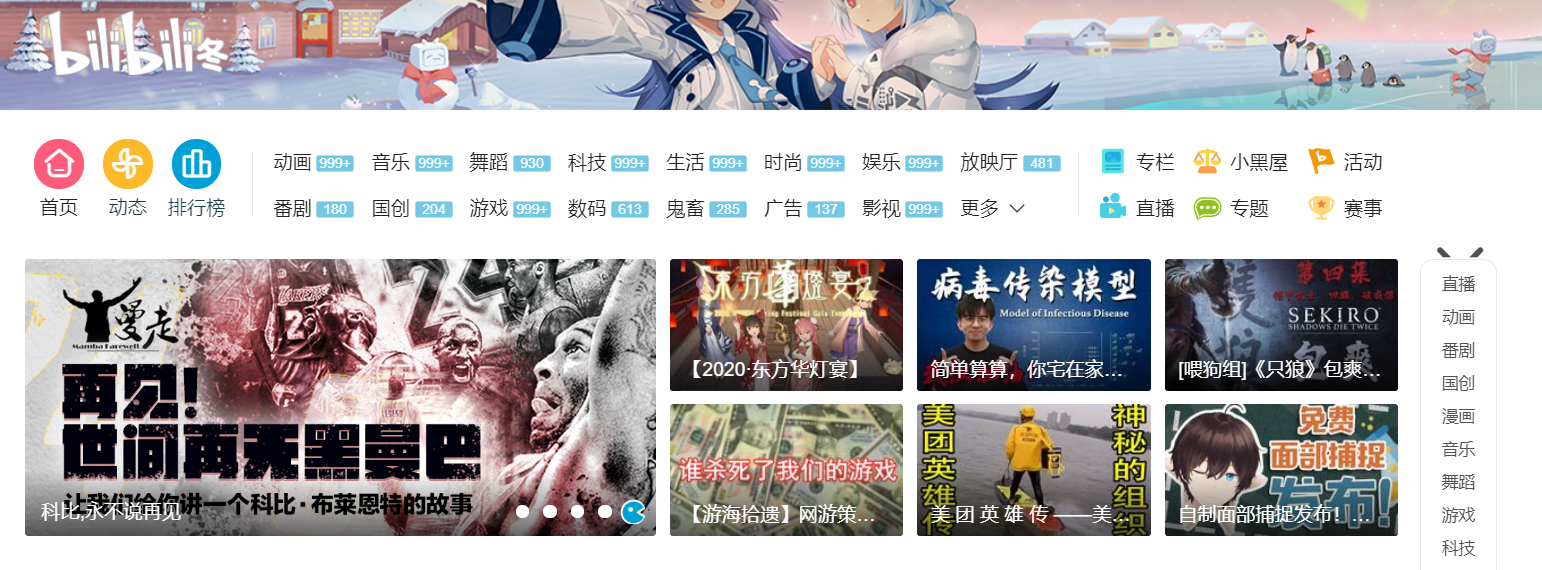
In December 2019 I started building a presence on Bilibili, hoping to reach 1,000 followers in 2020 (I’m currently 1% of the way there). It still feels difficult, because what I’m making now doesn’t quite fit Bilibili’s tone, and the numbers look much better on Xigua. But it’s still early, so I’ll keep at it for a year and then see how the data looks.
I’m writing this piece mainly to share some thoughts on video content. They may not be right; this is just a record.
This article has two parts: Why & How.
Why Bilibili?
1 The video era has arrived, and Bilibili has a lower barrier than Douyin and Kuaishou
Blog → Weibo → Douyin/Kuaishou: media has gone from long to short, and from text to text-and-images to video. Behind this is the gradual improvement of infrastructure and the falling barrier to publishing, so that content production and consumption have slowly spread from the top of the social pyramid to the whole pyramid.
Video is easier to understand and absorb than text and images, so naturally its audience is broader. Think about opening an article versus opening a video: the psychological pressure is on completely different levels.
At the same time, faster networks, lower data fees and short-video apps have already trained users to watch videos anytime, anywhere. You could say the video era has arrived.
Some people will say: short videos can be shot with just a phone, while long videos may need a computer for post-production, so obviously short videos have the lower barrier. That’s true—the barrier to shooting is indeed lower for short videos—but what I want to say is that the barrier to building up an account is lower on Bilibili than on Douyin and Kuaishou.
The 15-second limit of short videos means every second has to be carefully designed; if you can’t hook users within a few seconds, they simply swipe away. Moreover, this is no longer the early, wild-west era when casually posting a few videos could bring a flood of followers. Those who make it in short video today basically all have professional teams behind them; topic selection, shooting, post-production and promotion all take a lot of effort. Unless an individual creator has content that is far better than everyone else’s, it is hard to gain traction on Douyin or Kuaishou.
On Bilibili, although video production does have a certain barrier, that barrier also filters out some creators. Meanwhile, Bilibili’s creator monetization is currently weaker than Douyin’s and Kuaishou’s: apart from a limited number of categories where you can live off sponsored ads, in many areas there are views but the creator makes no money (the incentive program is only an incentive). This means competition on Bilibili is less fierce than on Douyin and Kuaishou.
Of course, the fact that some Bilibili creators can’t make money now doesn’t mean they never will. But by then, building an account will be much harder than it is today.
2 Bilibili’s user share and stickiness—this world ultimately belongs to the young
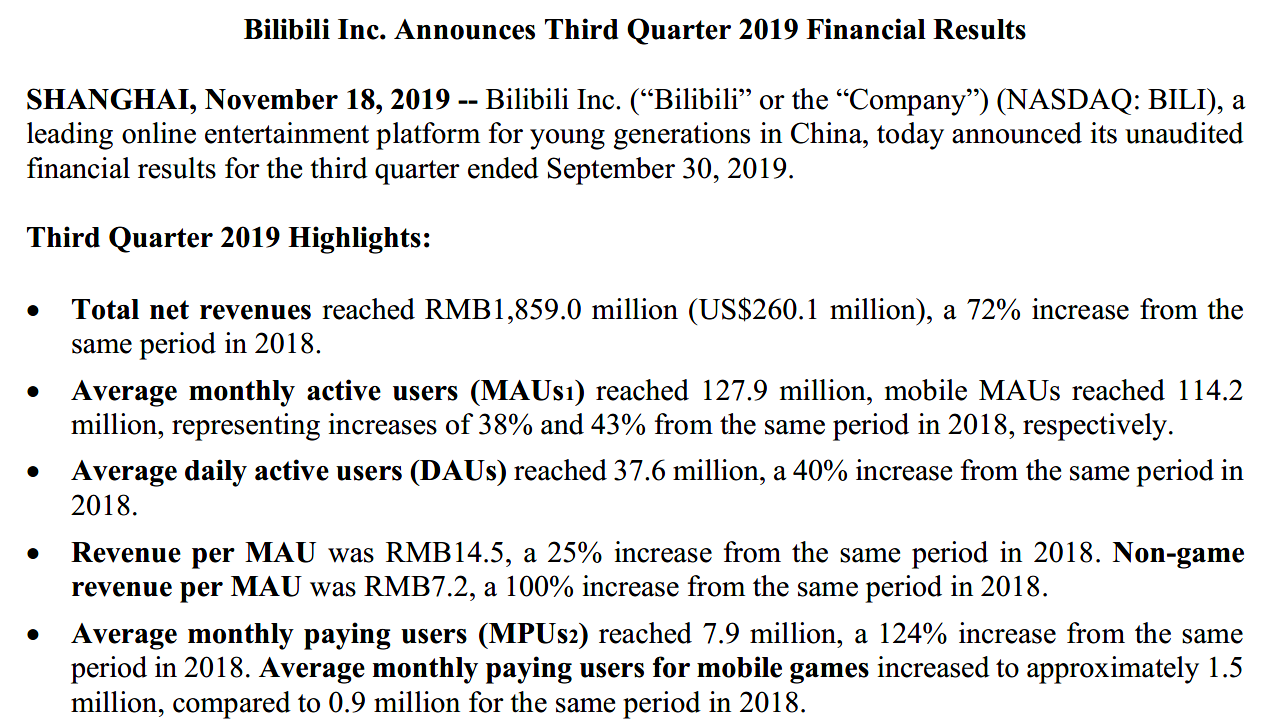
According to Bilibili’s Q3 2019 earnings report, it has 128 million monthly active users and 37.6 million daily active users, with an average of 83 minutes per user per day. Users aged 18–35 make up 78% of all Bilibili users; young people are Bilibili’s backbone and its future.
3 Bilibili is still in its growth phase and needs plenty of long-tail content to expand its content pool
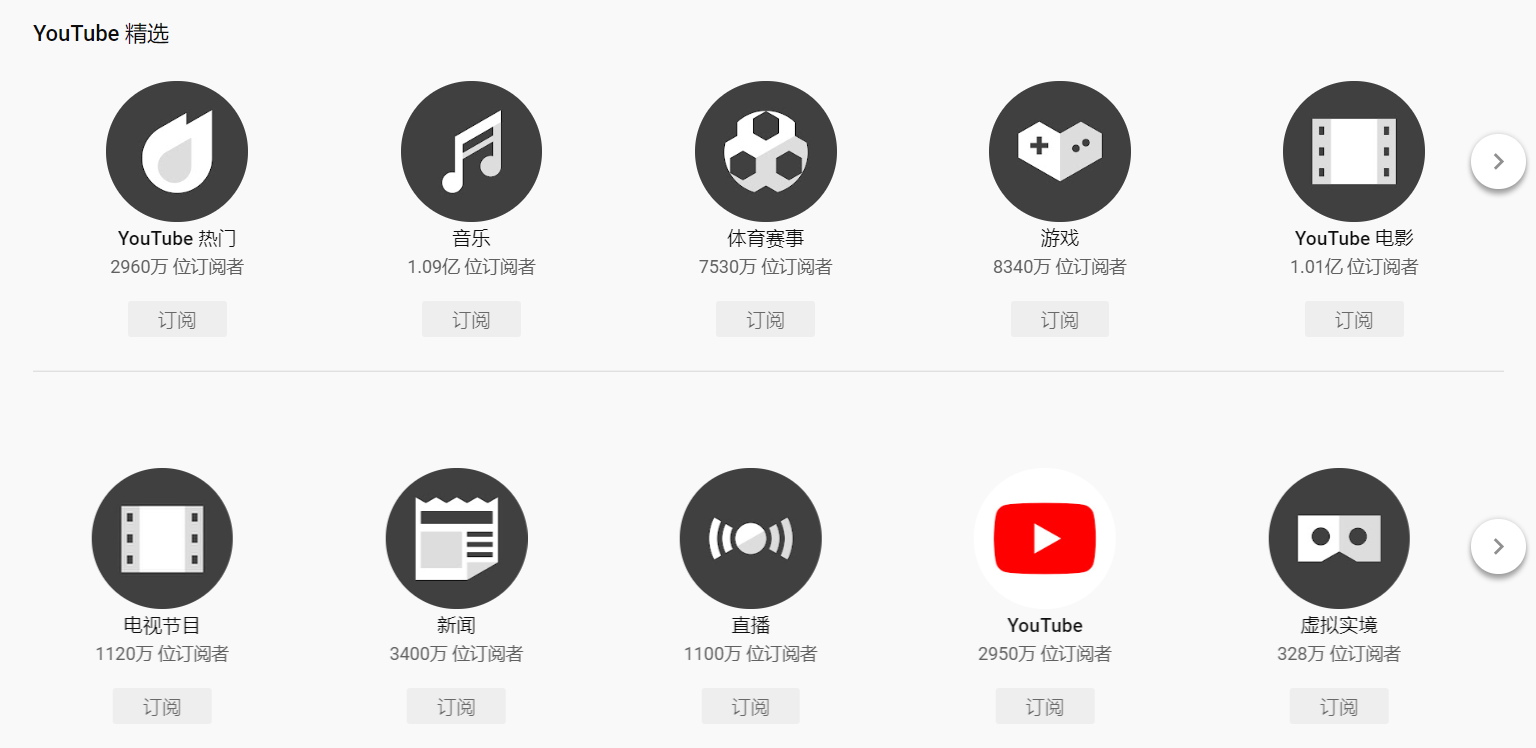
Who in the video business wouldn’t want to build China’s YouTube? Bilibili certainly does. After more than a decade of development, YouTube has built a mature content ecosystem. It is like a video library covering a vast range of long-tail content. Its huge library and effective recommendation algorithm have made it one of the world’s top three platforms by traffic.
Although Bilibili keeps breaking out of its niche, its content pool still looks thin compared with YouTube’s, and much of the long tail is not covered.
Each long-tail niche may have a low ceiling, but 30% of 100,000 is far more than 1% of 1,000,000. Getting in early is an advantage: better to establish a presence in some niches now than regret it later when competition has saturated the field.
4 Bilibili’s quality community atmosphere
Thanks to systems like Bilibili’s membership exam and “small black room” (a penalty box), the community atmosphere is clearly a notch above other video platforms. On WeChat Official Accounts, Weibo, and other platforms, creators who run ads often face abusive comments. On Bilibili, the danmaku (on-screen comments) are full of messages like “Congrats to the uploader for making money!” (恭喜阿婆主恰到饭). Bilibili users are happy to see creators earn income from quality content, and that atmosphere is truly rare online.
How?
1 Content is king: deep, high-quality content is the foundation of everything
This should be the most basic truth in the content industry: without sufficiently high-quality, in-depth content, no amount of tactics will last; they’re castles in the air.
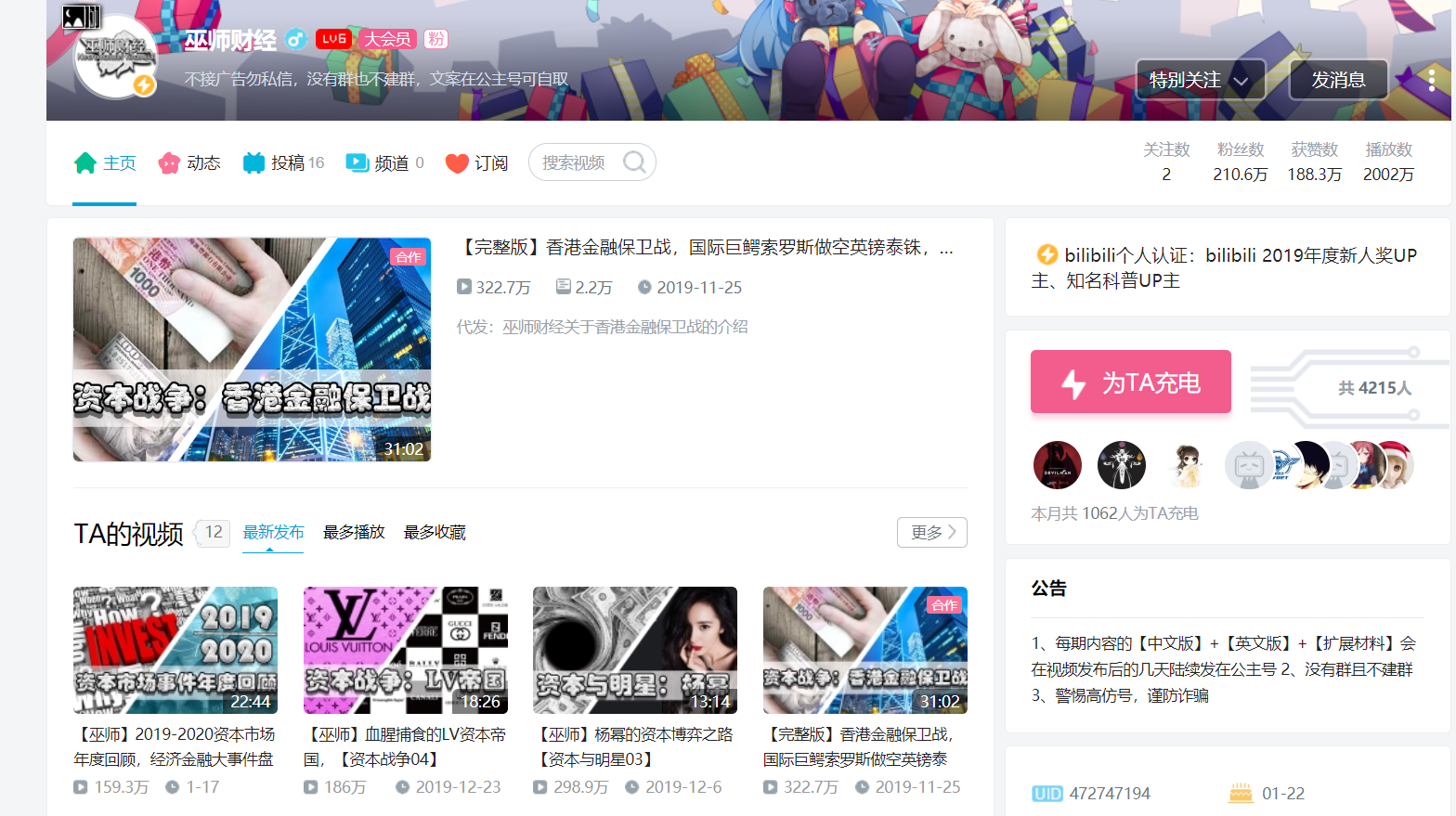
Wizard Finance (巫师财经), which took off in 2019: as of 2020.1.28, 12 videos, 2.09 million followers, nearly 20 million views.
Banfo Xianren (半佛仙人): as of 2020.1.28, 10 videos, 500,000 followers, 10 million views.
Both have dug deep in their respective fields (finance and risk control), producing high-quality content with a high barrier to entry. Although they’ve made only a few videos, individual videos have over a million views. Their audiences are very loyal: even Wizard Finance’s unformatted scripts get 40,000 to 50,000 reads each time on the Official Account.
Script: 2019–2020 Capital Market Annual Review, a Roundup of Major Economic and Financial Events
Deep, high-quality content attracts loyal followers and converts them more effectively; it also makes a sudden breakout more likely.
2 How to choose subject matter?
For video creators, the choice of subject affects many things later on: the breadth of topics, production difficulty, the ceiling, monetization methods, and more.
2.1 YouTube Copy to China
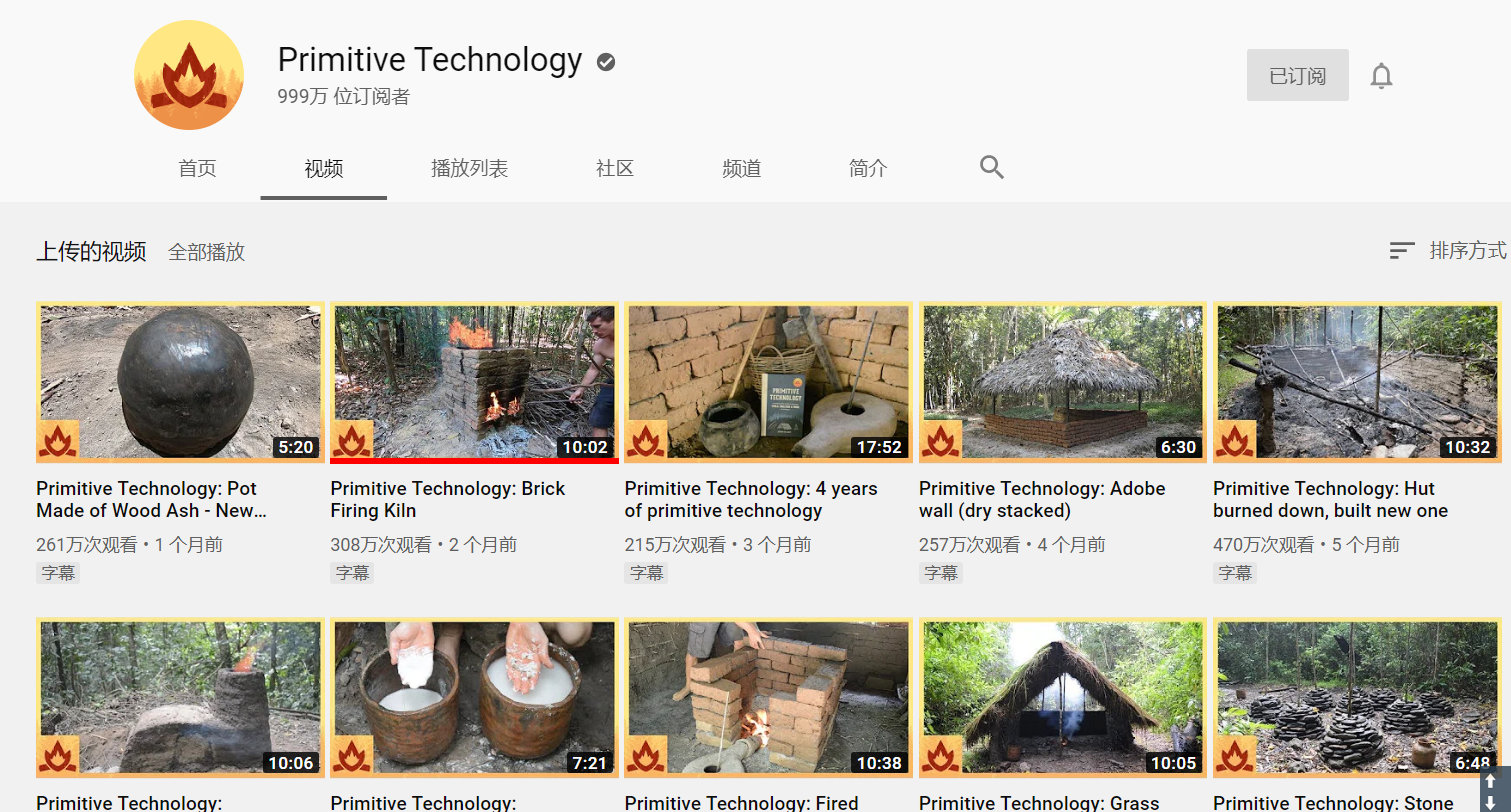
As the world’s largest video content library, YouTube lets you find all sorts of unusual channels. The “copy-to-China” approach can work here: when you come across a channel you’re interested in, check its upload dates, view counts, and production difficulty, then see whether you can find similarly positioned content in China.
If it’s a blue ocean, congratulations—you’ve found an opportunity worth trying. Even if similar content already exists, you can still put a fresh spin on it.
2.2 Upgrading text-and-image content from official accounts and other platforms into video
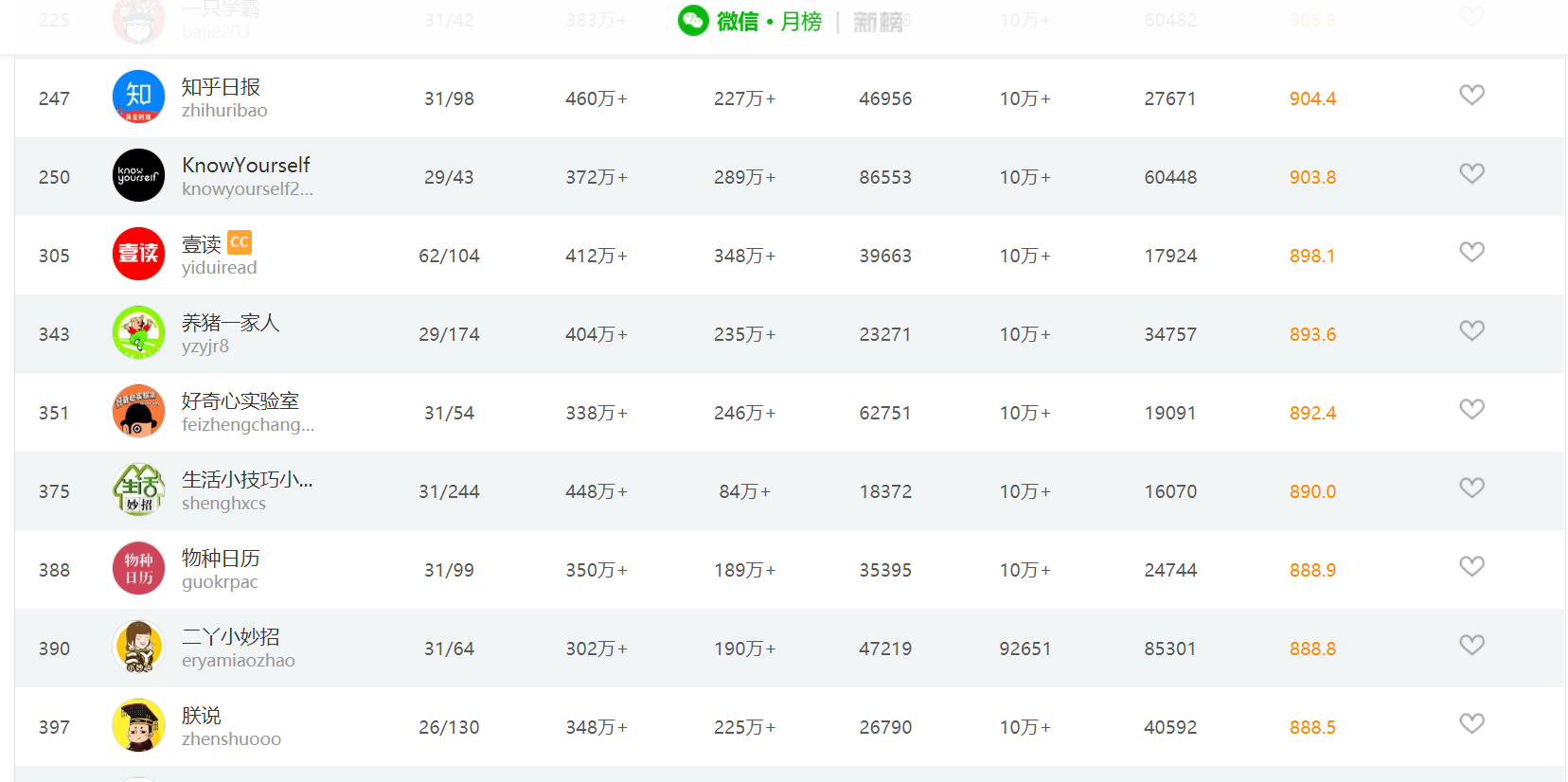
Video creators can follow the path taken by successful WeChat Official Account creators, adapting and expanding written posts into video. On Newrank, choose a category and look at the subjects and content of leading creators on Official Accounts, Weibo, and other text-and-image platforms. Then consider whether you could tell those stories in video form.
2.3 Draw on your own experience and find a niche
Many industries and life experiences offer knowledge that outsiders and newcomers have a hard time accessing in depth. If you have unique, reusable experience in a field, it may be worth exploring it further.
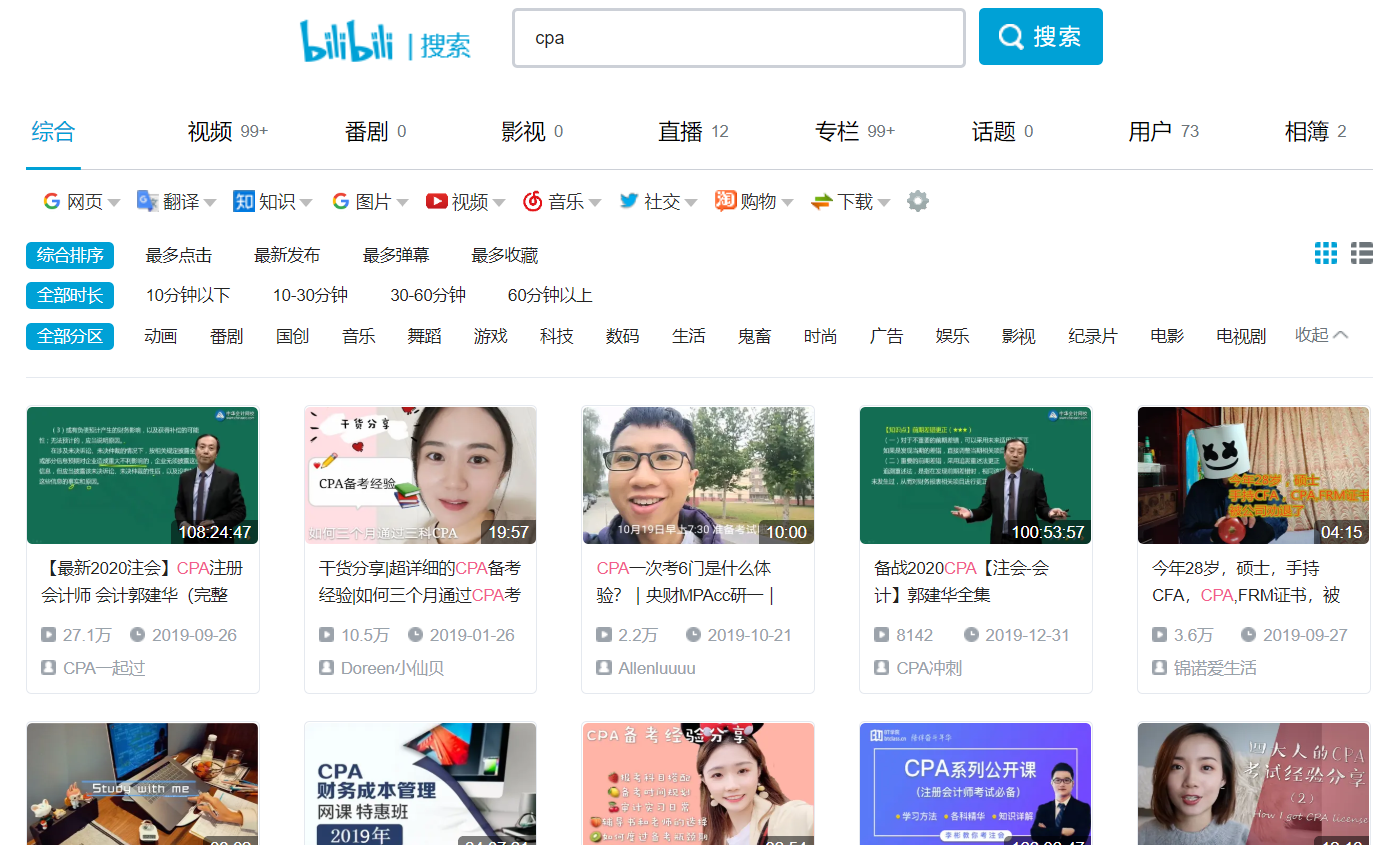
Take the CPA exam: it is in demand but hard to pass. If you have passed it and have experience you can share over the long term, that could be a niche. Or consider advanced mathematics, which many students struggle with. Recorded university lectures are available online, but they do not come close to meeting the demand. As someone who has taken the course, you could make short explanatory videos organized by problem type and exam period, building a distinctive content library of your own.
2.4 How to make money later
Sales = Traffic × Conversion Rate × Average Order Value. Remember this formula.
Content creators can monetize in a few ways: custom sponsorships, e-commerce, paid content and consulting, or ad revenue sharing. The subject they choose affects how many of these options are open to them.
Custom sponsored ads: high fees per campaign, but only leading accounts in certain categories can make a living this way.
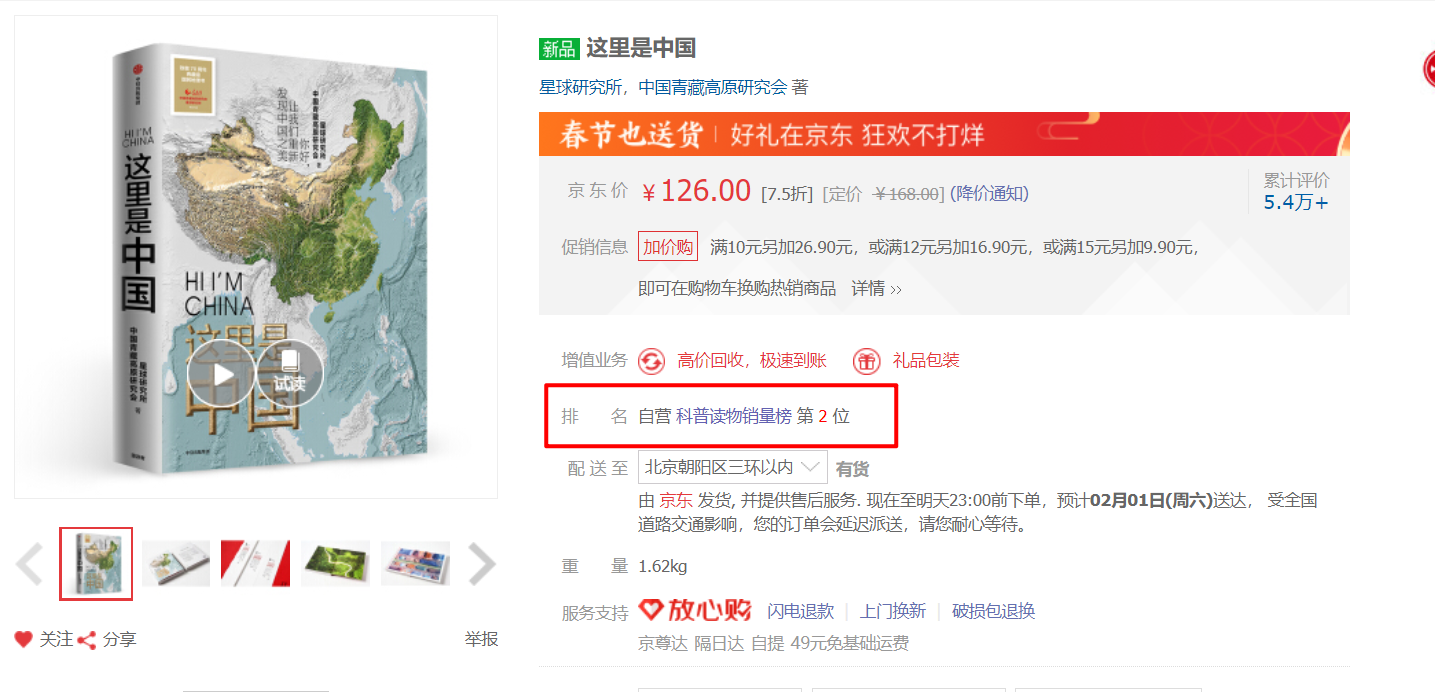
E-commerce: all three variables in the formula must meet certain conditions, so it suits positioning like beauty and fashion. But if follower stickiness is high, launching custom merchandise can also be very lucrative. For example, Xingqiu Yanjiusuo (Planet Research Institute)’s This Is China, priced at 168 yuan, sold over 100,000 copies within 20 days of release.
Paid content and consulting: like e-commerce, but the product is digital knowledge or advice. This model depends heavily on audience loyalty, and creators need expertise and credibility in their field. For examples, look at the owners of highly active Knowledge Planet groups.
Ad revenue sharing: Frankly, with several hundred thousand followers across all platforms, it’s hard to support yourself on ad revenue sharing alone (domestically Bilibili, Xigua, Baijiahao, Penguin/Qiehao). If YouTube also gets plenty of views, you can earn a relatively decent income thanks to the exchange-rate difference. Supporting yourself full-time on ad revenue sharing is simply unlikely for most creators.
Of course, if you don’t need to think about money, just follow your interests. If you do plan to make money, it’s best to think through your positioning in advance, since changing direction later is not easy.
3 Play the long game: focus on one field
Honestly, the early growth boom in video is over. On one hand, the industry has more competitors; on the other, platform rules are gradually maturing. This will weed out many low-quality creators who cannot compete. Those who last will be the ones producing high-quality, in-depth content.
Making videos—from choosing a subject to production and promotion—takes a lot of effort. During the cold-start period, an individual creator may face a long stretch with few followers, few views, and no feedback. It can feel like a survival test, and sticking with it is a major test of a creator’s endurance.
But if you keep focusing on one field and produce quality content consistently over time, you will eventually carve out a space of your own.
4 Understand algorithmic distribution to help the cold start
These days, even great work needs to be discovered. In their early stages, individual creators should use the platform’s algorithm to help promote their work.
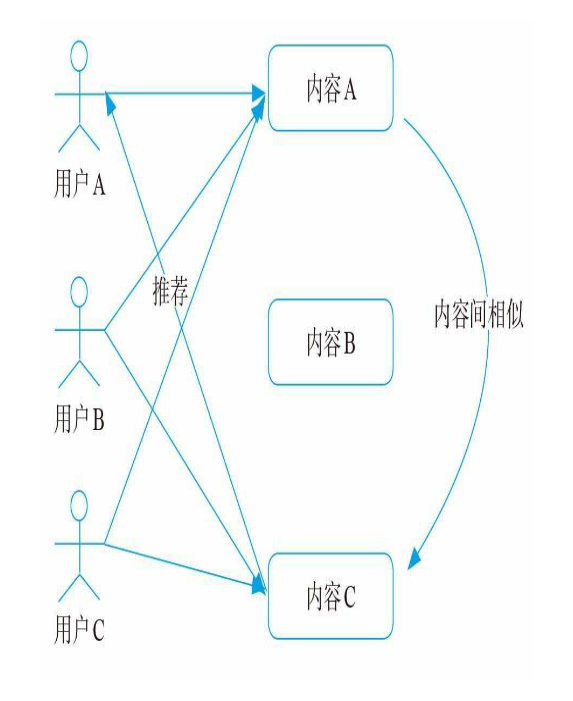
Understanding how platform algorithms distribute content can help creators get through the cold-start phase. I recommend reading Content Algorithms (内容算法); the author’s bio follows.
About the author
Yan Zehua is a contracted author on Jianshu and product director of Zhihu’s knowledge marketplace, responsible for product operations of paid content.
He previously served as a senior product manager at Toutiao, technical lead at “Kai Shu Tells Stories”, and a search architecture engineer at Baidu. While at Toutiao, he was in charge of the data flow and strategic distribution of Toutiao Video, the monetization of follower-related businesses on Toutiao accounts, and the strategic distribution of Micro Toutiao, experiencing the entire process of the rapid growth of Toutiao Video and follower businesses.
The basic principles of algorithmic distribution are similar across platforms. Mr. Yan explains them clearly in plain language, so anyone can understand them. (Reply to the official account with the exact Chinese keyword “内容算法” (“Content Algorithms”) to get this book.)
Here is just a brief outline: in the process of creating and promoting, creators need to consider how to help the machine understand the content better. Can the title, cover, tags and description let the machine position the content accurately?
For example, suppose a video is titled “The big scenes of Fast & Furious are actually happening in Beijing!” but the actual content is a street-racing video. The machine distributes it to viewers whose profiles include “Fast & Furious,” and the click-through rate and completion rate turn out poor, so the video actually gets down-weighted.
Of course, plenty of people deliberately skirt the edges of platform rules. Individual creators should read the rules carefully and make content honestly. The wild-west period is over: exploiting the rules might bring short-term gains, but once the platform tightens them, it can catch up with and penalize the creators involved.

Algorithmic distribution takes many factors into account; a creator’s credit score and the performance of past works both affect the distribution of later works. In the long run, exploiting loopholes in the rules is not worth it.
Closing
I’ve written several thousand words; they may not all be right, but I hope they help you.
If you’re interested, give it a try. After all, being early is an advantage.